
Why Is Ipomoea Spreading So Fast in Kajiado?
If you've walked through parts of Mashuru or Kajiado Central, it's easy to come away with one question:
How did this happen?
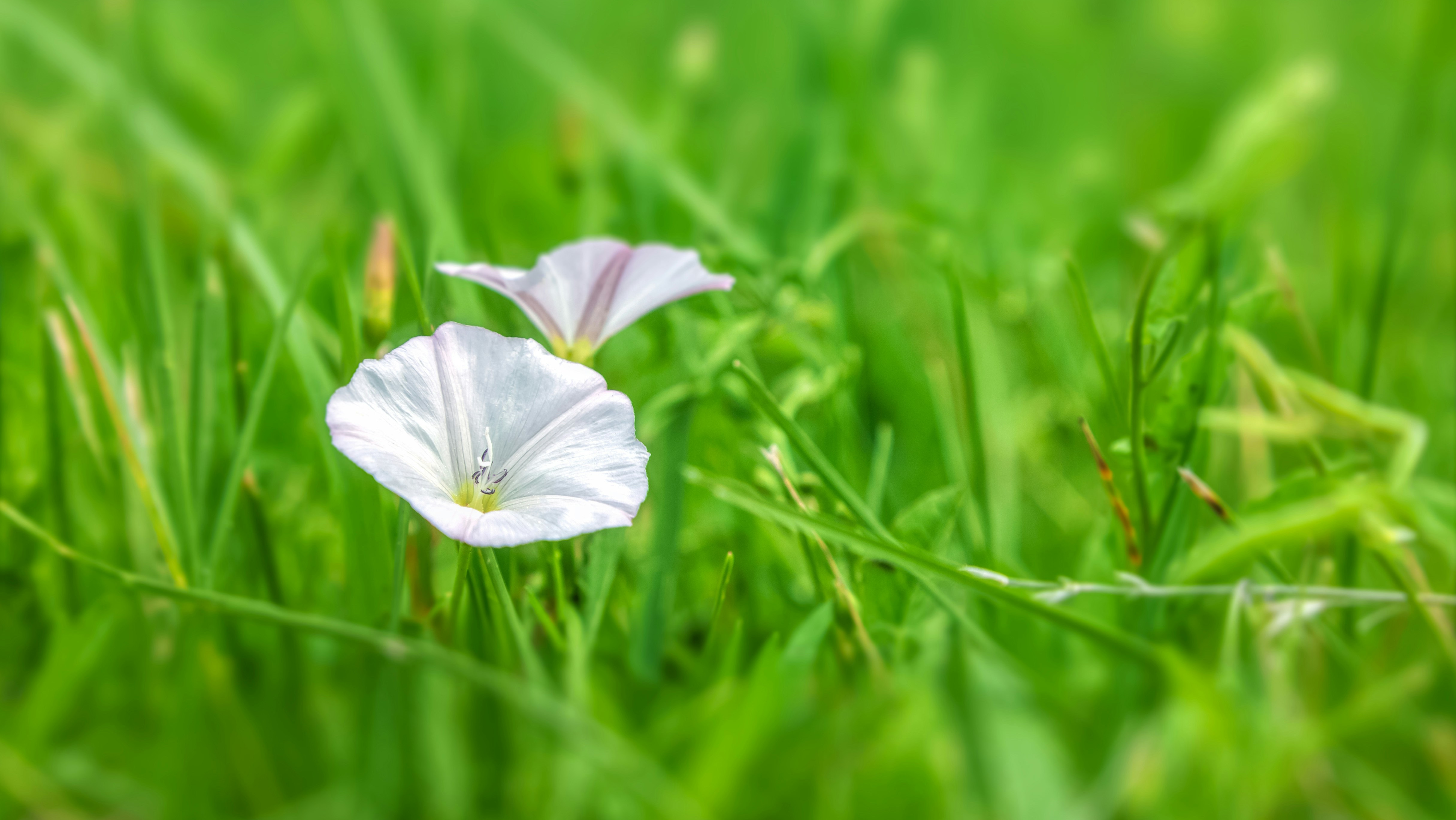
Ipomoea doesn't appear to spread evenly across the landscape. Some grazing areas are heavily covered while others remain relatively healthy. That isn't a coincidence. According to research and community observations, the weed is taking advantage of conditions that already existed.
Understanding those conditions changes how we think about the problem. Instead of asking how to remove the weed, we start asking why the land became vulnerable to it in the first place.
Ipomoea doesn't create degraded land, it exploits it
One of the clearest learnings from the research is that Ipomoea rarely establishes itself in healthy, well-functioning rangelands.
Instead, it thrives where the landscape has already been disturbed.
Researchers found that the weed is most common in heavily grazed areas where native grasses have thinned, bare ground has increased and the natural balance of the ecosystem has been weakened. In ecological terms, disturbed landscapes are easier for invasive species to colonise than stable ones.
Think of it like a house with a broken door.
The door isn't the reason a thief exists but once it's broken, getting inside becomes much easier.
Degraded rangelands work in much the same way.
Overgrazing opens the door
Community members consistently identified overgrazing as one of the main reasons Ipomoea has expanded across parts of Kajiado.
When livestock repeatedly graze the same land without enough time for grasses to recover, several things begin to happen.
Healthy grasses become less competitive.
Bare patches of soil appear.
The ground retains less moisture.
Native plants struggle to regenerate.
These changes don't automatically produce invasive weeds. They create exactly the kind of opportunities that invasive plants are built to exploit.
By the time Ipomoea arrives, much of the competition has already disappeared.
Check out Article 2; Anchor: the areas most affected by the invasion
Climate adds another layer
Communities also pointed to changing weather patterns as an important part of the story.
Many participants in the KALRO study identified the 1997–98 El Niño rains as the period when Ipomoea seemed to spread much more rapidly, even though the plant had already existed in the region for decades. Historical records suggest it was present in parts of Kajiado as early as the 1960s.
The rains probably didn't introduce the weed.
Instead, they may have created conditions that allowed an existing population to expand much more quickly across vulnerable landscapes.
It's a reminder that climate events often accelerate environmental problems rather than create them from scratch.
Built to survive
Ipomoea also possesses many of the characteristics that make invasive plants so difficult to manage.
Researchers describe a species that:
● grows rapidly after rainfall
● produces large numbers of seeds
● survives long dry periods through dormant seeds
● competes aggressively for sunlight, water and nutrients
● spreads efficiently across disturbed landscapes.
These traits don't guarantee success everywhere.
They become powerful only when healthy vegetation has already been weakened.
That's why two neighbouring grazing areas can experience very different outcomes.
Why some landscapes are hit harder than others
The research also identified environmental conditions that favour establishment.
Ipomoea was most commonly associated with:
● flat or gently sloping terrain
● predominantly red soils
● degraded grazing land
● areas experiencing sustained grazing pressure.
Even though the weed can occur under other conditions as well, the above helps explain why invasion tends to cluster in certain parts of Kajiado and don't appear evenly across the county.
The cycle that keeps repeating
Perhaps the most important insight isn't about the weed itself.
It's about what happens after it arrives.
As Ipomoea spreads, it suppresses grasses that livestock rely on. With less usable pasture available, grazing pressure often becomes concentrated on the areas that remain healthy.
Over time, those areas also become more vulnerable to degradation.
The result is a self-reinforcing cycle.
Healthy pasture declines.
Disturbed ground increases.
Ipomoea spreads further.
Even more pressure falls on the remaining grassland.
Breaking that cycle requires more than removing plants. It requires rebuilding the resilience of the rangeland itself.
Healthy grasslands are the best defence
One conclusion runs throughout the research: prevention is more effective than trying to reverse a large invasion after it has already taken hold.
Researchers recommend combining weed management with pasture improvement, reseeding degraded land and strengthening long-term rangeland management. Restoring healthy vegetation reduces the opportunities that invasive plants depend on, making future invasion less likely.
In other words, the best defence against Ipomoea isn't simply a shovel or a herbicide.
It's a healthy grassland.
Looking ahead
Understanding why Ipomoea spreads changes the conversation.
Instead of treating the weed as an isolated problem, it becomes part of a much bigger story about land degradation, climate resilience and how pastoral landscapes recover.
That perspective also explains why many communities have struggled to control the plant despite years of effort.
In the next article, we'll look at those efforts more closely: what has been tried, what has worked, and why simply removing Ipomoea rarely delivers a lasting solution.
References
Kidake, B. K., et al. (2015). Assessment of the Status of Ipomoea Weed Infestation in Kajiado County, Kenya.


Comments